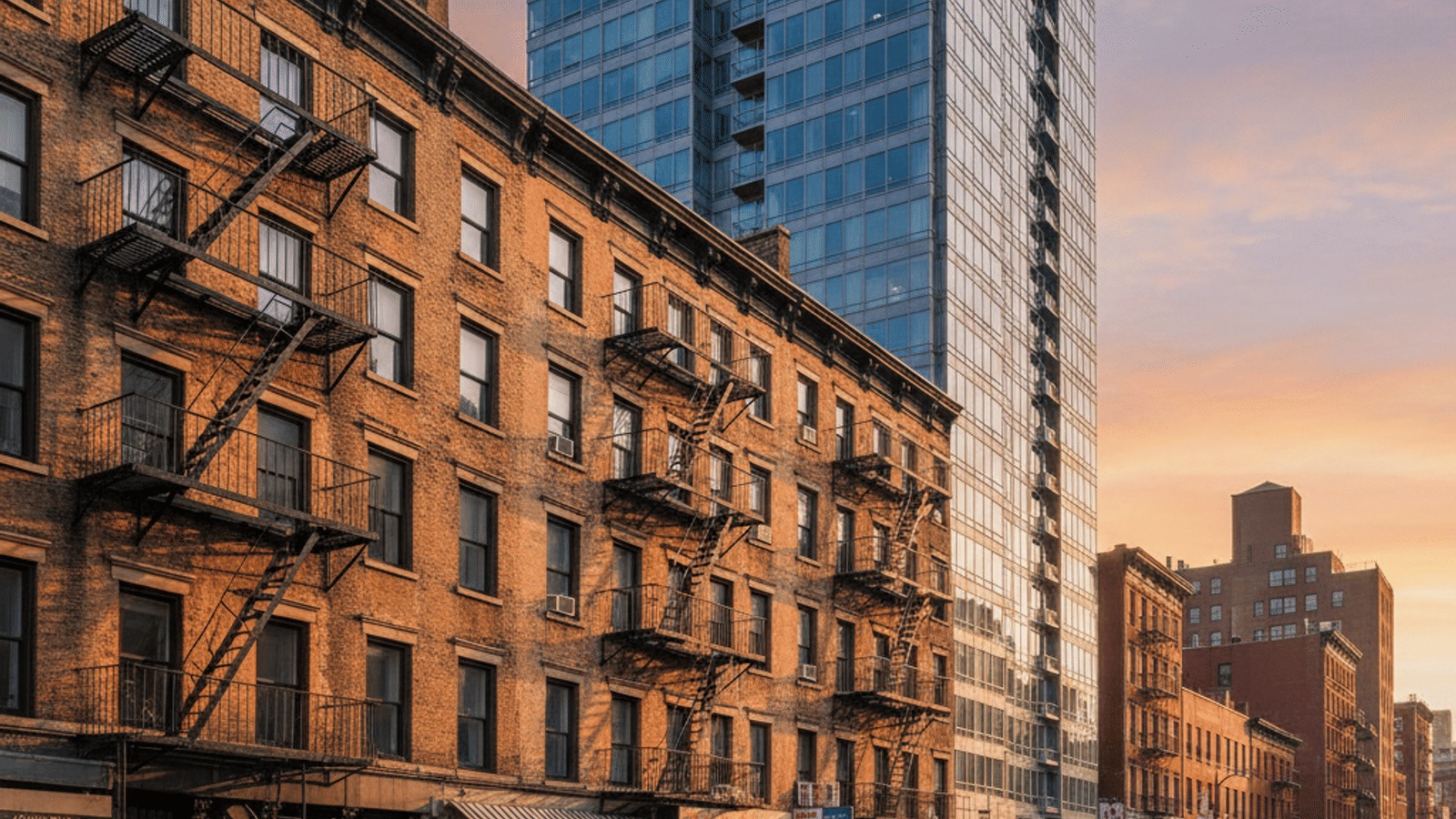
The Lower East Side is a neighborhood that is full of energy. It has that old New York grit that mixes easily with high-end developments. In a space of a few blocks, a building that has been standing for a hundred years stands alongside a classic deli that has not changed since the 1900s. Then a high-rise made of glass towers alongside a cutting-edge gallery. It is a dynamic environment that is appealing to several buyers who are looking to establish roots in the area.
Nonetheless, when it comes to purchasing a home in NYC, it is not the same process as in other parts of the United States. Furthermore, when it comes to LES, it also contains some of its own characteristics. You are not simply comparing prices to interest rates; you are also comparing approvals to liquidity. With proper preparation, first-time home buyers can also discover tremendous deals available in this part of NYC.
Though market trends are always fluctuating, prices in the LES are usually around $700k-$750k. That makes it a hot market, but it could be more affordable as compared to other neighboring locations such as SoHo or Tribeca.
Is the Lower East Side Right for You?
Before we dive into the financials, it is worth looking at what living here actually looks like day-to-day. The lifestyle is distinct, and it isn't for everyone.
Vibe and Culture
This neighborhood is culturally dense. You have access to legendary dining institutions like Katz’s Delicatessen and Russ & Daughters, sitting right alongside a vibrant nightlife scene that draws crowds from all over the city. It is a place where art galleries and indie music venues thrive, creating a bustling, creative atmosphere that rarely sleeps.
Housing Stock
Real estate here is predominantly defined by pre-war walk-ups and tenement-style buildings. If you are browsing Lower East Side listings, you will see a lot of character—exposed brick, fire escapes, and original molding—but fewer elevators and doormen compared to Uptown. There are pockets of new luxury developments, but the heart of the market is in older inventory.
Commute and Trade-offs
Commuting is generally excellent, with easy access to the F, M, J, and Z trains, plus the neighborhood is highly walkable to the East Village, SoHo, and Chinatown. However, buyers should be realistic about the trade-offs. Because of the nightlife, noise levels can be higher here than in purely residential zones. Additionally, the density of buildings means there are fewer large parks, though the East River waterfront is a great nearby escape.
Understanding LES Property Types: Co-ops, Condos, and HDFCs
In the suburbs, you buy a house. In the Lower East Side, you are usually choosing between three very different legal structures. Understanding these is the single most important step in your search.
Market-Rate Co-ops
Co-ops are the most common affordable option in Manhattan. When you buy a co-op, you don't own the apartment itself; you own shares in the corporation that owns the building, and you get a proprietary lease for your unit. Because of this structure, co-ops typically trade 10% to 40% lower than comparable condos. The catch? You have to be approved by a co-op board, which reviews your finances and background with a fine-toothed comb. They also tend to have stricter rules about subletting your apartment.
Condos
Condos are "real property," meaning you get a deed just like you would with a house. They are generally much more expensive than co-ops and come with higher closing costs. However, they offer flexibility. There is usually no board interview, and you have the freedom to rent the unit out or sell it to whomever you want. While excellent for investors, condos are rare in the lower price brackets in this neighborhood.
HDFC Co-ops
You will see this acronym often in the LES. HDFC (Housing Development Fund Corporation) co-ops are income-restricted units designed to be affordable for middle-income residents. These apartments are often significantly cheaper—sometimes listed under $500,000 or $600,000—but they come with strict caps on how much money you can earn to qualify (often based on Area Median Income, or AMI). They also usually have high "flip taxes" (fees paid to the building when you sell), meant to discourage short-term speculation.
Financial Requirements: It’s More Than Just the Down Payment
Many first-time buyers have a pre-approval letter in hand and think they are ready to go. In NYC, specifically with co-ops, the seller (and the board) wants to see a much broader financial picture.
The Down Payment
While you might see national loan programs offering 3% or 5% down, that rarely flies here. The standard minimum down payment for a co-op is 20%. Offers with less than 20% down are often rejected by sellers because they know the co-op board is unlikely to approve the deal.
Post-Closing Liquidity
This is the requirement that catches most people off guard. Boards want to ensure you aren't "house poor." They often require you to show that you have 1 to 2 years of mortgage and maintenance payments sitting in liquid cash (stocks, savings, bonds) after you have paid your down payment and closing costs.
Debt-to-Income (DTI) Ratio
Your bank might approve you with a high debt load, but a co-op board will not. Boards generally look for a Debt-to-Income ratio under 25% – 30%. If your monthly housing costs plus other debts exceed a third of your gross income, you may face rejection even if you have the cash.
The Board Package
Once your offer is accepted, you will compile a "board package." Think of this as a massive financial dossier proving your stability. It includes tax returns, reference letters, bank statements, and employment verification.
Budgeting for Closing Costs in NYC
The price tag on the listing isn't the final number. You need to budget for closing costs, which vary wildly depending on whether you choose a co-op or a condo.
Co-op Closing Costs
One of the biggest perks of buying a co-op is the lower closing cost bill. You can generally expect to pay 1% – 2% of the purchase price. This covers your real estate attorney, lien searches, and move-in deposits.
Condo Closing Costs
Condos are more expensive to close, usually running 2% – 4% or more of the purchase price. This is largely due to the Mortgage Recording Tax (roughly 1.8% for loans under $500,000 and 1.925% for loans above) and Title Insurance (~0.4%), neither of which applies to co-ops. If you are buying in a new development, the developer may also try to push their transfer taxes onto you, potentially raising costs closer to 5%.
Mansion Tax
If you are lucky enough to be looking at properties priced at $1,000,000 or more, New York State levies a "Mansion Tax" of 1% (or higher as the price goes up). This is paid entirely by the buyer.
Monthly Fees: Maintenance vs. Common Charges
When budgeting, pay attention to the monthly fees. In a co-op, you pay Maintenance, which includes building upkeep, heat, water, and the building's property taxes. In a condo, you pay Common Charges for the building, but you receive a separate bill for your property taxes.
First-Time Home Buyer Programs in NYC
If the numbers seem intimidating, there are programs in place to help buyers bridge the gap. There are a lot of financial assistance and homebuyer programs in lower east side NY:
HomeFirst Down Payment Assistance
This is a program run by the NYC Department of Housing Preservation and Development (HPD). It provides first-time homebuyers with a credit of up to $100,000 to be used in the down payment or closing costs. However, the program is not without conditions: usually, the recipient must occupy the dwelling from 10 to 15 years, and the income limit is set high, up to 80% AMI.
SONYMA (State of NY Mortgage Agency)
SONYMA provides homebuyers with competitive home mortgages and down payment assistance loans (DPAL) which provide up to 3% assistance towards the purchase price, with maximum assistance up to $15,000. This will be very beneficial for homebuyers who earn good but could not set aside a huge amount of funds.
HDFC Buildings
While not a "program" in the traditional sense, HDFCs act as a massive subsidy for the middle class. By capping the sale price and income of the buyer, these buildings keep housing stock affordable in neighborhoods that have otherwise become expensive.
Step-by-Step Guide to Buying in the LES
Ready to move forward? Here is a roadmap of how the process usually unfolds.
Pre-Approval: Before you view a single apartment, get a pre-approval letter. Listing agents in NYC prefer local lenders who understand the nuances of co-op questionnaires.
Hire a Buyer's Agent: The broker fees in NYC are paid by the seller. Having a buyer's agent or the best real estate agent in the Lower East Side will not cost you anything, and their expertise is invaluable for co-op rules and the putting together of your board package.
The Search: You'll probably begin your search online. Look for listings labeled "income restricted" if you're interested in pursuing HDFCs, or search using the terms "condop" or "condo" if you want to bypass the board interview process altogether.
Offer & Deal Sheet: When you find the one, your agent will put in an offer. If accepted, a "deal sheet" is generated and the customer moves to sign the contract with a deposit check. The latter usually constitutes 10% of the amount.
Board Application & Interview: One of the most nerve-wracking experiences comes here. If one is going to buy a co-op, he or she has to submit his or her application as well as go through an interview. This should be considered just like going for a job.
Closing: You then schedule the closing. The length of time from the accepted offer to the closing for co-ops will generally be 3 to 5 months. Condos will close in 1 to 3 months.
Final Thoughts on Lower East Side Living
The Lower East Side is one New York City experience uniquely holding its own value. This neighborhood provides deep roots and a vibrant future. Buying here requires patience and preparation-organizing your finances early and understanding sticker price versus real closing capability.
If you're ready to begin your search, the best initial step will be to connect with a local expert who can help you decipher the listings to find the building that will fit your budget and your lifestyle.
FAQs
What is the lowest down payment requirement for a co-op purchase on the Lower East Side?
In the Lower East Side, most cooperative boards require a minimum down payment of 20% down or more before an individual can purchase a property. However, other lending agencies may offer loans with lower down payments, but the cooperative board will not accept an amount lower than the board's minimum 20% down payment.
Are HDFC co-ops on the Lower East Side a solid investment option?
HDFC co-ops are great at providing long-term affordable housing but are usually not a good way to turn a quick profit. The flip tax (typically 30% or more of the profit) and price restrictions mean that the profit reaped on resale is somewhat limited. Therefore, HDFC co-ops are good buys for those planning on staying long-term.
Do I need a real estate attorney to buy a home in NYC?
Yes, it is customary and virtually required to retain a real estate attorney to close in NYC. This is because, unlike other states where the title companies perform the closing, New York attorneys actually prepare the contracts, conduct due diligence on the building's financials, and oversee the actual transfer of funds.
How much are closing costs for a condo vs. a co-op in NYC?
Closing costs for co-ops are significantly lower, typically ranging from 1% to 2% of the purchase price. Condos are more expensive, usually ranging from 2% to 4% (or more) because buyers must pay for title insurance and the mortgage recording tax.
Is the Lower East Side safe for first-time buyers?
The Lower East Side is a dense, highly active urban neighborhood with busy foot traffic day and night, which generally contributes to a sense of safety. However, like any popular nightlife destination, it can be noisy and chaotic late at night, so buyers should visit the specific block at different times to gauge their comfort level.