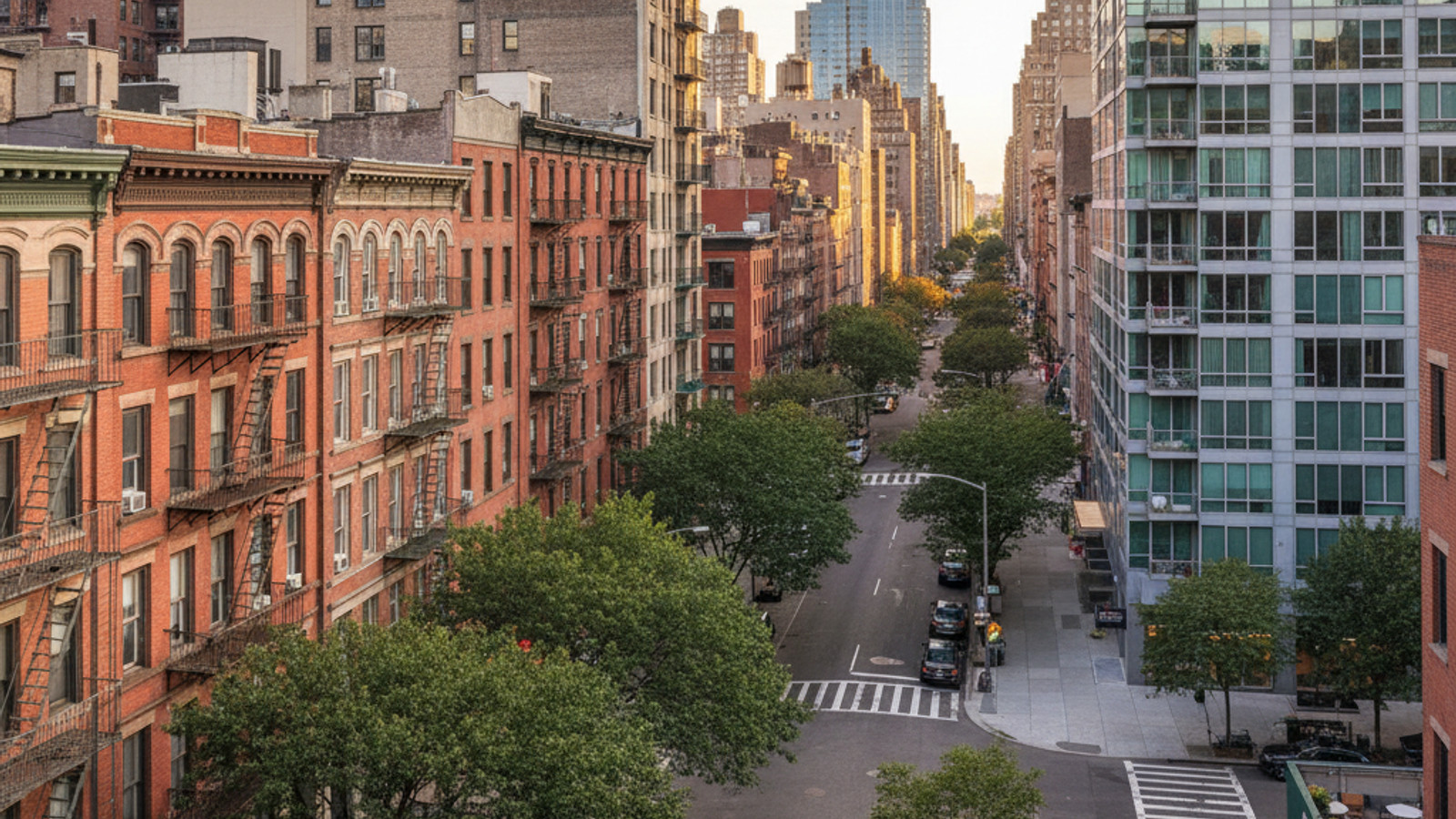
The Lower East Side stretches across zip code 10002, blending centuries of immigrant history with modern high-rise development. Buyers and renters looking at this slice of Lower Manhattan often have questions about how the local real estate market operates.
Housing options here range from historic walk-up apartments to new construction towers with sweeping views of the Manhattan Bridge. Understanding the local pricing, transit access, and neighborhood borders helps clarify whether this area aligns with your budget and daily commute.
Housing Costs and Property Types
Renters signing leases in the Lower East Side during 2026 typically pay between $5,700 and $6,000 per month. This average reflects a market split between updated pre-war apartments and premium units in modern elevator buildings. Those looking for more space or luxury amenities should expect to pay at the higher end of that range.
For buyers, the median purchase price for condos and co-ops sits between $1.1 million and $1.5 million. The housing inventory includes everything from compact tenement-style co-ops on Orchard Street to spacious glass-walled condos near the East River.
Buyers should factor standard building fees into their monthly carrying costs. Co-op maintenance fees and condo homeowner association (HOA) dues vary by building, but they directly impact your debt-to-income ratio during mortgage underwriting. New York, NY buyers should also budget for the state and city transfer taxes, which add a specific percentage to the closing costs on properties over $1 million.
Commuting and Public Transit Options
The Delancey Street-Essex Street station serves as the primary transit hub for the area. Riders can catch the F, M, J, and Z trains from this central location. These four lines provide direct routes to major employment centers across the city.
Commuting to the Financial District takes about 10 to 15 minutes on the J or Z train. Those heading to Midtown Manhattan can expect a 15-to-20-minute ride on the F or M train. The proximity to these trains makes the area practical for daily commuters who want to avoid multiple transfers.
Residents who prefer to travel by water can use the NYC Ferry system. The Corlears Hook stop connects the neighborhood to Brooklyn, Wall Street, and parts of Queens along the East River. This alternative route offers a less crowded commute during peak morning hours.
Parks, Markets, and Local Landmarks
East River Park runs along the waterfront, offering residents access to running tracks, sports fields, and open green space. Inland, Seward Park and Sara D. Roosevelt Park provide paved courts and shaded seating areas. Cyclists and pedestrians also use the dedicated paths on the nearby Manhattan Bridge and Williamsburg Bridge to cross into Brooklyn.
Essex Market anchors the local food scene with dozens of vendors selling fresh produce, meat, and prepared meals. Beyond the market, the neighborhood holds onto its immigrant history through long-standing delicatessens and traditional eateries. Famous spots like Katz's Delicatessen, Yonah Schimmel Knish Bakery, and Russ & Daughters continue to serve pastrami and smoked fish to locals and visitors alike.
Modern culinary staples like Clinton Street Baking Company and Morgenstern's Finest Ice Cream sit alongside these historic businesses. For cultural context, the Lower East Side Tenement Museum offers a detailed look at how earlier generations lived in these exact buildings. The area also supports a dense collection of contemporary art galleries, dive bars, and the New Museum on the Bowery.
Schools and Medical Centers
The neighborhood falls within New York City Geographic District #1. This district covers the local elementary, middle, and high schools operating within the 10002 zip code. Buyers and renters reviewing school assignments should check exact property addresses, as boundaries can shift slightly block by block.
Several major medical facilities operate within or immediately adjacent to the neighborhood. Mount Sinai Doctors maintains a large outpatient and urgent care facility at 104 Delancey Street. This location handles routine appointments and immediate medical needs.
For emergency services and specialized care, NYC Health + Hospitals/Gouverneur serves the community near the waterfront. NewYork-Presbyterian Lower Manhattan Hospital is also located just a short distance away, providing comprehensive emergency and inpatient care.
Geography and Surrounding Areas
The Lower East Side occupies a distinct pocket of Lower Manhattan, bordered by several well-known districts. To the north, Houston Street separates the neighborhood from the East Village and Alphabet City. To the south and west, the area merges into Chinatown near Canal Street and Chrystie Street.
Residents can easily walk to adjacent neighborhoods for dining and shopping. Little Italy and Nolita are just a few blocks west, offering a dense concentration of restaurants and boutique retail. The Bowery serves as a major western artery, connecting the area directly to the rest of downtown.
The neighborhood's street grid shifts slightly compared to the rest of Manhattan. While avenues run north to south above 14th Street, the local streets here follow an older, more angled pattern. This layout creates unique intersections and smaller, triangular building lots.
Lower East Side FAQs
What is the average rent in the Lower East Side?
For 2026, standard apartment leases in this area range from $5,700 to $6,000 per month. You will generally pay less for a walk-up unit on a side street than for a high-floor apartment in a new elevator building. Moving slightly north toward 11th Street in the East Village often changes the pricing dynamic entirely.
Which subway lines run through the Lower East Side?
The primary transit hub is the Delancey Street-Essex Street station. You can board the F, M, J, and Z trains directly from this platform. Additional transit options include the NYC Ferry stop at Corlears Hook along the water.
How long is the commute from the Lower East Side to Midtown?
Taking the F or M train from Delancey Street to Midtown Manhattan usually takes 15 to 20 minutes. The commute time remains relatively stable during morning rush hour because the route avoids bridge traffic. Driving the same distance often takes twice as long.
What are the main parks and green spaces in the Lower East Side?
East River Park is the largest local green space, featuring running tracks and waterfront views of Brooklyn. Inland, residents use Sara D. Roosevelt Park and Seward Park for outdoor recreation. Both inland parks offer paved courts, playgrounds, and shaded benches.