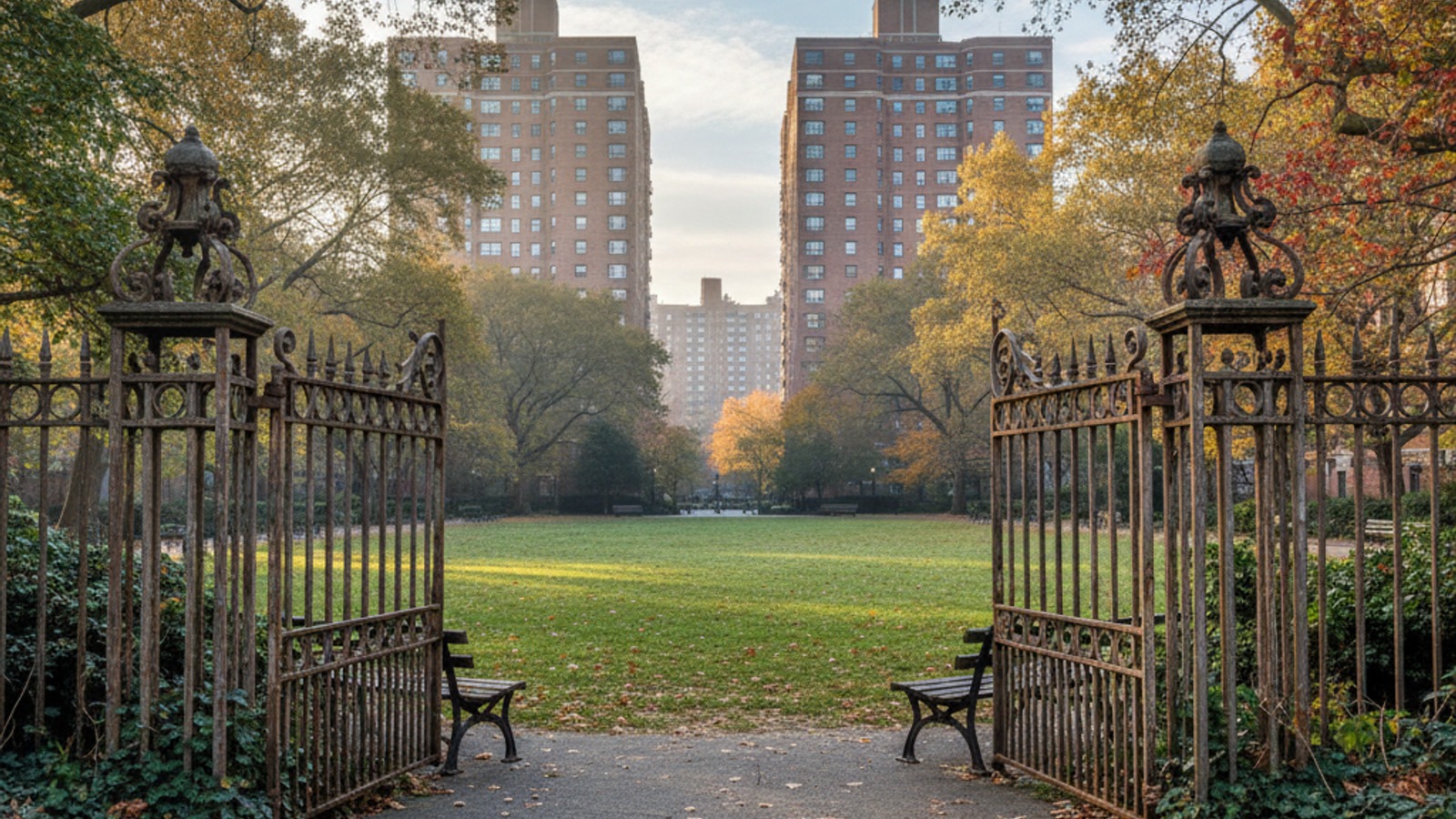
When most people hear "Lower East Side," they immediately picture the boisterous nightlife, crowded bars, and 24-hour energy of Rivington and Ludlow Streets. But if you cross south of Delancey Street, the volume drops, the pace slows, and you enter a distinct micro-neighborhood centered around Clinton Street and East Broadway.
This area, often referred to by locals simply as "South of Delancey," offers a completely different rhythm than its northern neighbor. It is a place where long-term residents, creatives, and newcomers mix in a setting that feels more like a village than a nightlife district. The visual landscape here is a fascinating collision of eras: classic pre-war tenements sit shoulder-to-shoulder with the mid-century brick towers of the Seward Park Cooperative, all while the Manhattan Bridge looms dramatically in the background.
Living here means embracing a dual heritage. You are walking through the intersection of deep Jewish history and the fading but resilient "Little Fuzhou" community, now layered with a modern wave of galleries and cafes. For those looking for the character of the Lower East Side without the noise, this pocket is often the perfect compromise.
The Seward Park Influence: A Community Anchor
You cannot talk about this neighborhood without understanding the massive influence of Seward Park—a name that applies to both the green space and the housing complex that anchors the area.
Let's start with the park itself. As the first municipal playground in the United States, Seward Park is the front yard for the entire neighborhood. On any given morning, you will see groups practicing tai chi near the gates, residents reading on benches, and neighbors catching up while crossing the plaza. It provides a rare, open-air breathing room that is hard to find in other parts of downtown Manhattan.
Then there is the Seward Park Cooperative. These four iconic brick towers dominate the skyline here and play a huge role in the local vibe. Because these are co-ops with high owner-occupancy rates, they provide a stable residential base. Unlike the transient rental turnover common on the north side of Delancey, people move here and stay for decades. This stability creates a genuine neighborhood feel where shop owners know your face and neighbors actually say hello.
Dining & Nightlife: From Old World to New Wave
The food scene around Clinton Street and East Broadway is curated and specific. You won't find rowdy sports bars here; instead, you'll find destination spots that people travel from Brooklyn to visit.
The Brunch Staple: It is almost impossible to mention this area without citing Clinton Street Baking Company. Yes, the lines for their blueberry pancakes are legendary, but for locals, it is a reliable anchor that put this strip on the culinary map.
The New Cool: The area has recently become a magnet for a cooler, low-key dining crowd. Spots like Ha's Snack Bar offer a unique Vietnamese-French mix, while Kisa serves up Korean distinctives. These places are trendy, but they generally lack the chaotic "party" energy found a few blocks north.
Cultural Hub: A major draw for the creative crowd is Metrograph on Ludlow. It is much more than a movie theater; with its commissary restaurant and bar, it acts as a clubhouse for film lovers and industry types, adding a layer of sophistication to the nightlife here.
"Little Fuzhou" Remnants: While the neighborhood is changing, the influence of the Fuzhou community remains visible along East Broadway. You can still find traditional bakeries and hole-in-the-wall noodle shops that offer incredible food at unbeatable prices, standing their ground amidst the new wine bars.
Real Estate Mix: Tenements, Co-ops, and Condos
If you are looking at homes for sale in the Lower East Side, specifically in this southern pocket, you will generally encounter three distinct types of inventory.
First, you have the pre-war tenements. These are the classic five-story walk-ups that define the LES aesthetic. They offer immense character—think exposed brick, fire escapes, and original hardwood floors. However, buyers should be aware that these units often have smaller footprints and, naturally, no elevators.
Second, and perhaps most significant for value hunters, are the Seward Park Co-ops. These units often offer the best price-per-square-foot value in the area. They feature larger layouts, balconies, and elevators, along with amenities like a gym and private parks. The trade-off is the co-op board process, which requires financial transparency and approval, but the payoff is more space for your money compared to a condo.
Finally, there is a growing number of new developments. You have boutique condos popping up along Clinton Street that offer modern finishes in smaller buildings. On the fringe of the neighborhood, luxury high-rises like One Manhattan Square offer resort-style living, though they feel distinct from the tenement vibe of the core neighborhood.
Shopping & Daily Amenities
One of the best parts about living south of Delancey is that it is highly functional for daily life. You aren't living in a tourist trap; you are living in a place designed for residents.
For groceries, you have excellent options. Trader Joe's is located nearby on Grand Street, making the weekly shop easy. For more specialized needs, Essex Market is just a short walk away. This isn't just a market; it's a culinary destination where you can buy high-end cheese, fresh fish, and specialty produce all under one roof.
Retail here has shifted away from bargain stores toward a mix of vintage boutiques and small art galleries, such as 56 Henry. Additionally, the neighborhood bleeds right into the "Dimes Square" micro-hood near Canal and Division Streets. This proximity gives you access to high-end fashion and niche retail just steps from your front door, without having to live right in the middle of the scene.
Transportation: Life on the F Train
When discussing the commute, we have to talk about the East Broadway station. This stop on the F train is the primary lifeline for the neighborhood.
Locals will tell you that the station is deep and the escalators are famously temperamental, but it provides a direct shot to Midtown in one direction and Brooklyn in the other. If the subway isn't your preference, the M15 Select Bus Service runs along Allen and Pike Streets, offering a quick way to shoot up the east side of Manhattan.
However, the biggest transportation perk is walkability. From here, you are a short walk to the heart of Chinatown, the revitalized Seaport District, and the walking paths of the Manhattan Bridge. For many residents, the ability to walk to work in the Financial District or bike over the bridge to DUMBO is a major selling point.
Frequently Asked Questions
Is the Clinton Street and East Broadway area safe?
This area is generally considered a quieter, residential pocket of the Lower East Side. While it borders busier urban areas, the presence of the Seward Park Cooperative and the 7th Precinct nearby contributes to a stable community atmosphere, though standard city awareness is always recommended at night.
What is the difference between the Lower East Side and East Broadway?
The main difference is the vibe and density. The "main" Lower East Side (north of Delancey) is famous for high-volume nightlife, bars, and noise. The East Broadway area (south of Delancey) is significantly quieter, more residential, and characterized by a slower pace and longer-term residents.
Is "Little Fuzhou" still on East Broadway?
Yes, but the neighborhood is in transition. While many traditional Fuzhou businesses have closed or moved due to changing demographics and rising rents, you will still find authentic restaurants, bakeries, and community centers operating alongside new galleries and cafes.
What subway lines service Clinton Street and East Broadway?
The primary subway access is the F train at the East Broadway station. Residents also frequently walk to the Delancey St/Essex St station to catch the J, M, and Z lines if they need different connections.