If you stand at the corner of Orchard and Broome on a Saturday afternoon, you are standing in the absolute center of the Lower East Side’s energy. This isn't the manicured quiet of the Upper East Side—and let’s be clear right away, if you are looking for that UES silence and white-glove service, you might be on the wrong end of the island. This is the LES, specifically the corridor running roughly from Houston Street down to Canal, centered on the twin arteries of Orchard Street and Ludlow Street.
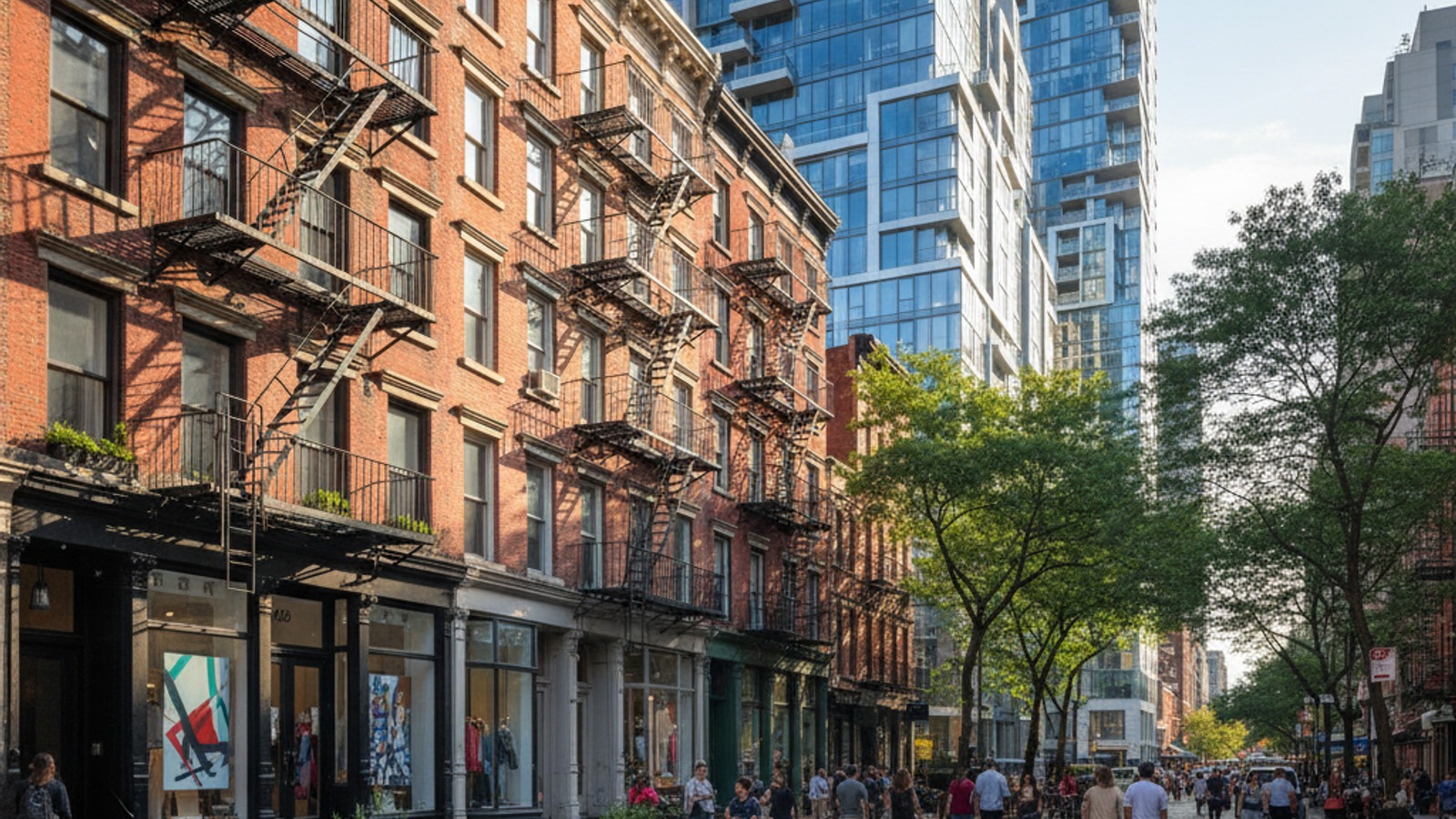
This micro-neighborhood is a study in contrasts. It is where historic grit meets $20 cocktails, and where century-old tenement architecture sits in the shadow of glass-walled luxury condos. For buyers and renters, this area offers the city's most intense duality: a heritage-rich shopping district by day and a high-octane revelry zone by night. It is loud, it is crowded, and for the people who love it, there is nowhere else in Manhattan that feels quite this alive.
A Tale of Two Streets: Day vs. Night Atmosphere
To understand living here, you have to understand the distinct personalities of the two main streets. They run parallel to each other, but they operate on different clocks.
Orchard Street is the daytime soul of the neighborhood. Historically, this was a pushcart market, and that "Sunday pedestrian mall" vibe still lingers. During the day, the street is closed to cars in certain sections, allowing locals to wander between art galleries, boutique fashion shops, and the iconic Tenement Museum. It feels like a neighborhood village, where you grab coffee and dodge tourists looking for the perfect pickle.
Ludlow Street, on the other hand, wakes up when the sun goes down. This street holds onto the neighborhood's rock 'n' roll history—think Velvet Underground context—with a density of dive bars, music venues, and restaurants that spill onto the sidewalks.
The shift happens almost instantly around 6:00 PM. The metal gates roll down on the fabric stores and galleries, and the neon signs flicker on for the bars. On weekends, the "Open Streets" program often turns the asphalt into an extension of the sidewalk, creating a block-party atmosphere that lasts well into the night.
Real Estate: Tenements, Lofts, and Luxury Infills
The housing stock in the Orchard and Ludlow corridor is as varied as the crowd on the sidewalk. You essentially have two main options: the historic and the hyper-modern.
Pre-War Walk-Ups are the dominant housing type here. These are the classic 5 to 6-story tenement buildings that define the look of the Lower East Side. If you are looking at homes for sale in the Lower East Side, expect exposed brick, fire escapes, and character in spades. However, "character" often means walk-ups (no elevators) and older heating systems.
The "Railroad" Layout is something you will see frequently in these older buildings. This is where rooms lead directly into one another without a hallway, often with the bathroom off the kitchen. It is a quirky, historic layout that maximizes space in narrow buildings, but it offers less privacy than modern box layouts.
Luxury Condos provide a stark alternative. In the last decade, modern infills like 100 Norfolk or the conversions near the Blue Moon Hotel have introduced elevators, doormen, and floor-to-ceiling windows to the block.
Pricing Reality: Do not let the graffiti or the "grit" fool you—this is one of the most in-demand zip codes in the city. The price per square foot remains high because you are paying for the location. Whether you are renting a renovated loft or buying a condo, the market here is competitive.
Lifestyle Reality: Noise, Traffic, and "Hell Square"
If we are having an honest conversation about living here, we have to talk about the noise. There is a nine-block area roughly bordered by Allen, Essex, Houston, and Delancey that locals and blogs sometimes refer to as "Hell Square." This nickname comes from the sheer density of liquor licenses in a small radius.
The Noise Factor is real. If your apartment faces the street on Ludlow or Rivington, you will hear the nightlife. Thursday through Saturday nights are high-volume, with crowds moving between bars and Ubers honking for position.
Density and Sanitation go hand-in-hand here. Because the foot traffic is so high, the streets take a beating. Sanitation trucks run frequent routes, which adds to the morning noise profile.
The Trade-Off is simple: You accept the noise as the price of admission for unmatched convenience. You live here because you want to be able to walk to twenty different 4-star restaurants, catch a live band, and hit a gallery opening, all within three blocks of your front door. If you prioritize silence over access, you might look further east toward the river, but if you want to be in the mix, this is it.
Local Amenities: Culture and Convenience
Despite the nightlife reputation, this corridor is packed with daytime amenities that make it a functional place to live.
Cultural Anchors: The Lower East Side Tenement Museum at 97 Orchard Street isn't just for tourists; it’s the cultural heart of the block. The International Center of Photography is also nearby, adding to the artsy vibe.
Food Scene: You have legendary spots like Katz's Delicatessen on the corner of Ludlow and Houston (yes, the line is long, but the pastrami is worth it) and Russ & Daughters for your morning bagel ritual.
Essex Market: Essex Market is a massive upgrade for local grocery shopping. The new complex offers everything from fresh fish and produce to high-end cheese and prepared foods.
Shopping: The area has roots as a garment district, and that spirit lives on in shops like Moscot for eyewear and dozens of independent clothing boutiques that you won't find in Midtown.
Green Space: While the corridor is concrete-heavy, you have immediate access to Sara D. Roosevelt Park, a long strip of green space that offers courts and breathing room.
Transportation and Connectivity
For commuters, the Orchard and Ludlow corridor is surprisingly well-connected, provided you are comfortable with the subway or walking.
The Subway is the lifeline here. The Delancey St/Essex St station is a major hub, giving you access to the F, M, J, and Z trains. This makes getting to Midtown, the Financial District, or Brooklyn relatively painless.
The Williamsburg Bridge feeds directly into Delancey Street. If you are a cyclist or a runner, having direct access to the pedestrian path over the bridge is a massive perk, opening up Williamsburg for quick trips.
Walkability is off the charts. You are a short walk from the trendy shopping of Soho, the restaurants of the East Village, and the boutiques of Nolita. Most residents find they rarely need to leave a 15-minute walking radius for their daily needs.
Frequently Asked Questions
Is the Orchard and Ludlow corridor safe at night?
The area is generally very safe in terms of personal security because it is incredibly active. There are almost always people on the street, and the area is well-lit due to the density of businesses. However, it can feel chaotic and overwhelming due to the large crowds and traffic late at night.
What is the difference between Orchard Street and Ludlow Street?
Think of Orchard Street as the "Daytime" street and Ludlow as the "Nighttime" street. Orchard is famous for its historic shopping, Sunday pedestrian hours, and galleries, while Ludlow is known for its concentration of bars, music venues, and nightlife energy.
Are there elevators in Orchard Street buildings?
Generally, no. The majority of the housing stock consists of pre-war walk-up tenements, meaning you will likely be taking the stairs. Elevators are usually found only in the newer luxury condo developments or converted hotels.
Why is it called "Hell Square"?
"Hell Square" is a local colloquialism used to describe the micro-neighborhood bounded by Allen, Essex, Houston, and Delancey Streets. It earned the name due to having one of the highest concentrations of liquor licenses in the city, leading to significant noise, congestion, and nightlife activity.