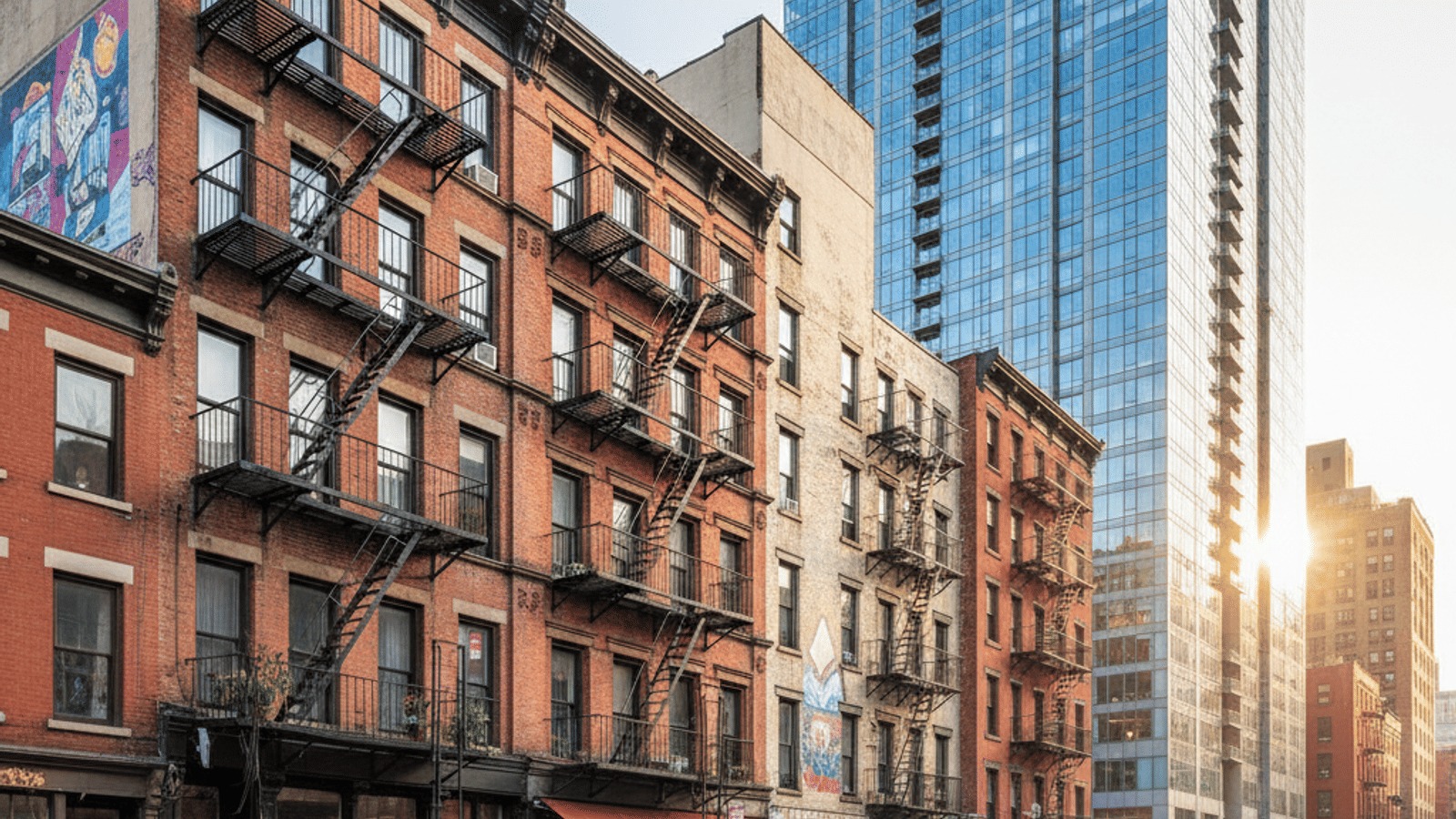
Walk down Orchard Street on a Tuesday morning and you’ll spot a century-old fabric store opening next to a high-end coffee shop serving oat-milk lattes—this contrast defines the LES. Sitting south of Houston and north of Canal, the neighborhood pairs tenement walk-ups with gleaming glass high-rises; if you’re looking for homes for sale in the Lower East Side, expect that same grit-and-glam mix.
Long the first stop for generations of immigrants, the LES still bears Jewish and Italian roots alongside vibrant Latino communities, making it one of the city’s most culturally dense pockets. Whether you’re looking at the Lower East Side housing market, or planning a visit, the LES is loud, proud, unapologetically busy—a living museum that never stopped partying.
The Vibe: Art, History, and High Energy
The LES gives you a front-row seat to New York’s creative pulse: decades of artistic legacy from musicians, painters, and counter-culture icons live on in street art and small independent music venues, even as some of that grit has been priced into expensive galleries and boutique hotels. You’ll see the creative spirit on every block—murals, late-night shows, and a gallery scene coexisting with neighborhood institutions.
Demographically the mix is obvious: long-time residents in rent-stabilized apartments share sidewalks with NYU students, creative professionals, and high-income buyers filling new luxury condos. Be clear about one thing before you move: the volume knob is turned up. With destination dining, nightlife around “Hell Square”, and the bustle of Delancey Street, quiet after 9 PM is rare—if you need silence, choose your specific street carefully.
Real Estate: From Tenements to Luxury Towers
The LES housing mix falls into three buckets. Pre-war walk-ups (five- or six-story red-brick buildings with fire escapes) offer character—exposed brick and original hardwood—but smaller square footage, odd layouts, and no elevator (carrying groceries up flights is common). Mid-century co-ops like Seward Park Cooperative deliver larger layouts, balconies and elevators and strong value, but buying requires strict co-op board approvals and financial scrutiny.
The third bucket is new luxury construction—towers and boutique condos around One Manhattan Square and Essex Crossing with doormen, gyms, pools, and sweeping river views. If you’re buying a condo in NYC or hunting homes for sale in the Lower East Side, pick the bucket that matches your budget and lifestyle before you start touring.
Here is a rough idea of what the market looks like right now:
• Rentals: The market is competitive, especially in the summer. You might see studios ranging from $2,800 to $3,500, with one-bedrooms jumping to $3,500–$4,500 or more depending on the building's amenities.
• Purchases: Co-ops can still be found starting around the $500K mark for smaller units, whereas modern condos in new developments often start well over $1M and climb rapidly for higher floors and river views.
Cost of Living in the Lower East Side
Cost of living in the Lower East Side is high and dominated by housing. Expect one-bedroom rents around $4,300–$4,800 and two-bedrooms commonly $5,300+, with seasonal peaks May–August; landlords typically screen to roughly 40× monthly rent, so guarantors or concessions often matter. Buyers should budget for median sale prices near $740K–$975K, plus co-op maintenance or condo common charges, property taxes, occasional broker fees, and dining/nightlife/groceries that sit above the national average.
Housing choice drives your monthly budget: pre-war walk-ups and co-ops usually offer lower purchase prices but come with strict boards and ongoing maintenance, while luxury condos cost more up front but include amenities and simpler rental options. To lower near-term costs, sign leases in winter, seek listings with concessions, or target value co-ops on quieter side streets. Bottom line: the LES is expensive compared with most U.S. cities, and housing, like rent or mortgage + fees, is the single biggest cost driver.
Transportation: Subways, Buses, and Walkability
Getting around the LES is generally easy but location-dependent: the Delancey St–Essex St station is the neighborhood hub with direct access to Midtown, the Financial District, and Brooklyn.
If you live farther east toward the river, the subway can be a 10–15 minute walk, so buses become essential—especially the M15 Select Bus Service on 1st/2nd Avenues, which is a surface-level subway, and the M14A/M14D crosstown routes that link you to Union Square and west-side lines.
• Walkability: The area has a high walk score. You can easily walk to the East Village, NoLita, and Chinatown in minutes.
• Cycling: If you bike, you are in a great spot. The entrance to the Williamsburg Bridge is right here, making for an easy commute or leisure ride into Brooklyn.
• Driving: Honestly, keep the car in storage. Street parking is notoriously difficult due to street cleaning rules and the sheer density of dining sheds and commercial traffic.
Dining and Nightlife: A Foodie's Paradise
If you love food, the Lower East Side is basically an open-air buffet—its dining scene is a major draw for residents and visitors across the tri-state area, blending century-old institutions with cutting-edge vendors and neighborhood restaurants.
• Katz’s Delicatessen on Houston Street: legendary pastrami that’s part museum, part neighborhood anchor.
• Russ & Daughters: century-old bagels, lox, and smoked fish that locals rely on.
• Essex Market: a massive modern food hall with vendors from gourmet cheese to artisan tacos.
• Restaurant corridors: Orchard, Ludlow, and Broome host everything from high-end bistros to tiny ramen shops.
• Nightlife mix: grimy dive bars, hidden speakeasies, and live venues like Bowery Ballroom and Rockwood Music Hall.
• Peak crowding: Friday and Saturday nights bring heavy foot traffic as people hop between bars and venues.
Parks and Waterfront Access
Despite its "concrete jungle" reputation, the LES enjoys solid waterfront green space—East River Park is the neighborhood’s major recreational lung, stretching along the water with running paths, ball fields, and biking lanes. It’s currently undergoing large flood resiliency projects but remains a vital spot for fresh air and river views, and nearby Pier 35—with its porch swings and skyline outlook—provides a modern sunset unwind.
Closer to the blocks, Seward Park functions as the neighborhood’s living room, with playgrounds, a public library branch, and plenty of benches for people-watching.
Safety, Noise, and Urban Realities
It is important to have a realistic conversation about the environment here. The Lower East Side is an intense urban area.
Noise
This is the number one complaint for newcomers. Between the honking cars, the bridge traffic, and the nightlife crowds, it is one of the louder neighborhoods in Manhattan. The narrow streets tend to echo sound, so if your apartment faces the street on a block with three bars, you will hear it.
Safety
Regarding safety, people always ask “is the Lower East Side safe?” and the area is generally safe and very heavily trafficked, which provides a sense of security in numbers. However, it can feel "grittier" than uptown neighborhoods like the Upper East Side. Petty crime can happen, and late-night crowds can sometimes get rowdy. The contrast we mentioned earlier applies here too; you might have a luxury lobby on one corner and a poorly lit area on the next.
Sanitation
This is another reality check. Because the streets are narrow and the population density is high, plus all those restaurants, trash bags on the sidewalk are a common sight on collection days. It’s just part of the trade-off for living in such a bustling, dining-heavy district.
Comparing LES to Nearby Neighborhoods
If you are on the fence about purchasing property in New York and aren't sure if the LES is the right fit, it helps to compare it to its neighbors and look at the best neighborhoods in the Lower East Side.
• LES vs. East Village: The East Village is immediately north and shares a similar vibe, but it feels slightly more residential and low-rise. The LES has more dramatic contrasts with high-rise luxury buildings and a more concentrated, destination-style nightlife scene.
• LES vs. Williamsburg: Williamsburg is often called the "mirror" of the LES across the river, offering a similar hipster/artistic vibe and waterfront views; the only real difference is the commute and the borough-living in the LES keeps you in Manhattan proper, which some people prefer for work access.
• LES vs. Chinatown: Chinatown lies to the south and west of the LES, respectively. It is more affordable and frenetic during the day, yet much quieter at night. The LES is most gentrified, where rents are higher and avant-garde cafes serve as a staple.
Pros and Cons of Living in the Lower East Side
Below is a quick, practical snapshot of what people say they gain and give up living in the Lower East Side — the biggest lifestyle and value trade-offs that tend to influence decisions about renting, buying, or hunting homes for sale in the Lower East Side.
Pros:
Here are the neighborhood strengths that buyers, renters, and locals most often cite:
• Incredible Food: Access to some of the best dining in the world, from cheap dumplings to Michelin stars.
• Culture & History: You are living in a neighborhood with a deep, visible soul.
• Transportation: Excellent access to multiple subway lines at Delancey/Essex.
• Walkability: You can live your whole life within a 10-block radius and never get bored.
Cons:
Here are the neighborhood drawbacks that buyers, renters, and locals most often mention:
Noise Levels: It can be exhausting if you value peace and quiet.
Price for Space: You often pay a premium for small, older apartments.
Walk-up Fatigue: Many affordable units require climbing stairs daily.
Subway Gaps: The far eastern edges of the neighborhood are a long walk from the train.
FAQs
Is the Lower East Side a safe place to live?
Generally, the Lower East Side is safe, especially in the busy areas where foot traffic is high day and night. However, it does have a grittier urban feel compared to neighborhoods like the Upper West Side, and residents should stay aware of their surroundings, particularly late at night on quieter side streets.
How much does it cost to live in the Lower East Side?
The cost is high relative to the national average but competitive for lower Manhattan. Rent for a studio typically starts around $2,800 to $3,000 per month, while buying a co-op can start in the $500,000 range, with luxury condos going for well over $1 million.
What is the commute like from the Lower East Side to Midtown?
The commute is quite efficient if you are near the Delancey St-Essex St hub. The F and M trains can get you to Midtown, like Rockefeller Center or Bryant Park areas, in about 15 to 20 minutes, making it a popular location for professionals working uptown.
Is the Lower East Side a good area to settle in?
Many households enjoy the Lower East Side for its parks, such as Seward Park, and because of the diverse cultural experiences available. Even as some apartments are rather small, especially in historic walk-ups, co-ops on Grand Street and other new developments have larger layouts and more amenities to support growing households in comfort.