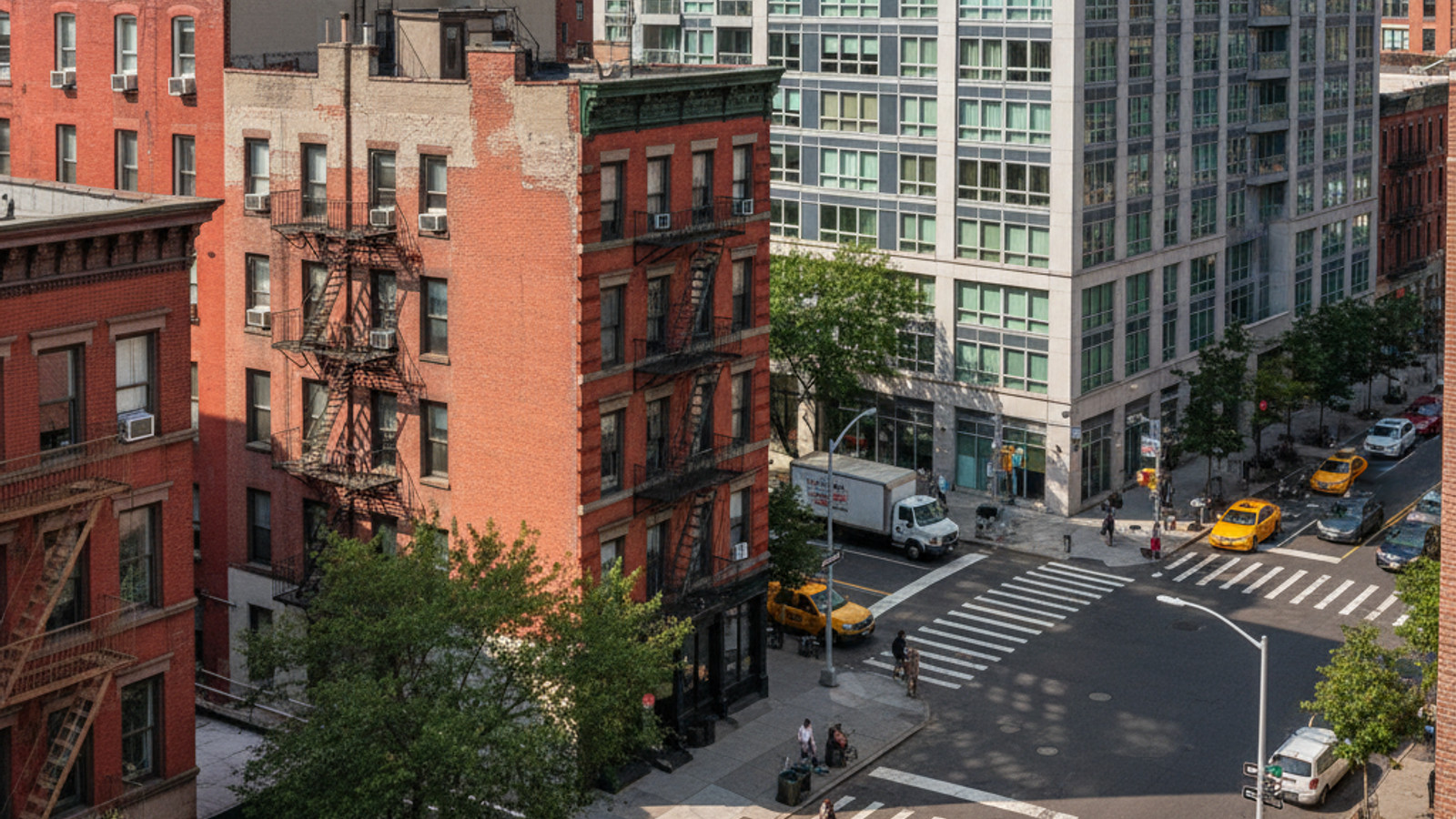
Selling property in Manhattan requires absolute precision, and the Lower East Side presents a uniquely complex environment for accurate valuations. Historic tenement buildings stand shoulder-to-shoulder with striking new glass towers, creating extreme variations in property values from one block to the next.
Navigating pricing strategies in lower east side ny means understanding a hyper-local market where standard city-wide metrics often fall short of reality. Sellers need to account for strict board requirements, hyper-specific building amenities, and immediate proximity to transit hubs to capture a buyer's attention.
As we move through the 2026 market, setting the wrong asking price can easily result in a property sitting stagnant for months. A data-driven approach ensures you attract serious offers while maximizing your final financial return.
The neighborhood has evolved significantly over the past decade, blending its rich cultural history with high-end luxury developments. This ongoing transformation requires sellers to view their property objectively through the eyes of today's highly educated buyers.
The unique architectural footprint of this area means no two transactions are exactly alike. Understanding how to leverage your specific property traits is the key to a successful and profitable sale.
The 2026 Lower East Side Real Estate Market Landscape
The current market reveals a stark divide in property values based entirely on the type of building you own. Overall median sale prices currently hover between $803,000 and $1,400,000 across the broader neighborhood.
When you separate the available inventory, the median price for condos sits around $1,800,000. Conversely, co-ops command a much lower median of roughly $493,000 due to their inherent ownership structures and strict entry barriers.
This massive gap highlights exactly why general neighborhood averages are essentially useless for individual sellers. You must align your pricing expectations with the specific asset class you hold rather than relying on blended data.
Average days on market currently range from 91 to 106 days, setting a clear expectation for how long a properly priced unit will take to secure a contract. If your property crosses the 120-day mark without an accepted offer, the market is directly rejecting your baseline valuation.
The overall median price per square feet ranges from $985 to $1,592 depending heavily on the building's age and interior condition. Accurately plotting your unit within this wide spectrum requires a hard look at your specific block and building history.
Properties situated closer to the borders of SoHo, Manhattan often experience a slight spillover effect in pricing. Buyers priced out of neighboring districts frequently look here, bringing higher budgets but demanding premium finishes in return.
Market velocity also shifts depending on the exact price tier you occupy. Entry-level co-ops tend to move slightly faster than ultra-luxury penthouses, simply due to the larger volume of qualified buyers operating at lower price points.
Co-op vs. Condo: Tailoring Your Pricing Strategy
Your property type dictates your absolute pricing ceiling and determines the exact financial profile of your target buyer. Co-ops generally require pricing that is 20 to 30 percent lower per square foot than comparable condos in the same zip code.
Historic walk-ups and tenement-style co-ops carry strict board approval processes that heavily restrict the available buyer pool. Because boards often demand 20 to 25 percent down payments and massive liquid asset reserves, you must price the unit to reflect these rigid financial hurdles.
Sellers in co-op buildings must also carefully factor in flip taxes, which commonly range from one to three percent of the total sale price. When buyers calculate these closing costs alongside high down payments, their maximum offer amount shrinks accordingly.
Modern high-end condos completely bypass these restrictive board requirements, allowing sellers to push the asking price much higher. Investors, pied-à-terre buyers, and those relying on heavy financing will pay a massive premium for the flexibility that condo ownership provides.
The subletting rules of your specific building also play a major role in determining the final listing price. Co-ops with strict primary residency requirements deter investors, forcing you to price the unit purely for traditional end-users.
Condos with flexible leasing policies naturally attract a much wider audience, driving up competition and baseline value. Understanding who is legally allowed to purchase and use your unit is the first step in establishing a competitive price.
Maintenance fees in co-ops also directly impact your pricing strategy. If your building carries unusually high monthly maintenance costs, buyers will naturally reduce their maximum offer to keep their total monthly debt-to-income ratio in check.
Valuing Location: Transit, Parks, and Accessibility
Micro-neighborhood features drastically alter what buyers are willing to pay, even for identical apartment buildings located just three blocks apart. Proximity to the Delancey St-Essex St subway station, which services the F, M, J, and Z lines, adds a measurable premium to your listing price.
Properties positioned near Seward Park or the East River Park command higher valuations due to the rare access to open green space. Buyers place a high monetary value on having immediate outdoor access within a dense urban grid.
Conversely, units positioned directly against the FDR Drive often require a slight price reduction to offset the constant traffic exposure. The visual and auditory impact of the highway fundamentally limits the maximum achievable price for these specific units.
Objective environmental factors play a massive role in buyer interest across this vibrant neighborhood. High nightlife density and street noise along Bowery or Orchard Street can easily deter certain buyers from submitting an offer.
Ground-floor or lower-level units in these heavy commercial corridors must be priced aggressively to compensate for the active street life. A quiet, tree-lined block near the waterfront will always support a higher price per square foot than a loud commercial strip.
Sellers must objectively assess their immediate surroundings rather than relying on the broader historical reputation of the area. Hyper-local pricing adjustments are non-negotiable if you want to attract serious, qualified buyers.
The presence of protected bike lanes and localized street improvements can also provide a minor bump in valuation. Buyers appreciate upgraded municipal infrastructure that makes daily commuting smoother and more efficient.
The Impact of Objective Property Features
Beyond the street location, the physical realities of your specific unit dictate the final pricing adjustments you must make. Buyers in 2026 expect certain modern conveniences, and lacking them requires a direct concession in the asking price.
A fifth-floor unit in a historic walk-up will sit on the market significantly longer than an identical unit in an elevator building unless the price reflects the daily physical toll. You must carefully calculate the value of these specific property features when finalizing your target number:
In-unit laundry commands a massive premium, as it remains a genuine rarity in older New York City apartment buildings.
Elevator access expands your buyer pool significantly and justifies a higher price per square foot compared to traditional walk-ups.
Modern building amenities like roof decks or fitness centers boost the property value but often come with high monthly HOA fees that can suppress a buyer's total budget.
Creating a Custom Comparative Market Analysis (CMA)
Pulling accurate comps in a neighborhood with such diverse housing inventory requires extreme discipline and local expertise. Comparing a newly renovated unit in a historical building with a new development property will completely skew your CMA.
Sellers must isolate recent closed sales data specifically within their local zip code and exact asset class. You cannot use a condo sale to justify the price of a co-op, even if the units share the exact same floor plan and square footage.
Focus exclusively on closed sales from the last three to six months to capture the precise reality of the 2026 market. Active listings only show what other sellers are hoping to get, while closed sales prove what buyers are actually willing to spend.
Investors analyzing the local rental market will also compare your unit against current rent in lower east side buildings to determine their potential capitalization rate. If the purchase price does not align with local rental yields, investor interest will vanish immediately.
You must also make strict mathematical adjustments for the interior condition of the comparable properties. A unit requiring a full gut renovation must be priced significantly lower than a turnkey property, factoring in the high cost of local construction.
The most effective strategy in our current market is pricing slightly below the closest comparable closed sale. This targeted approach drives multiple offers and creates competitive bidding right out of the gate.
Generating a bidding war often pushes the final sale price higher than an initially inflated asking price would have ever achieved. Overpricing your unit on day one is the single most expensive mistake a seller can make.
Your real estate professional should provide a detailed breakdown of these adjustments in writing. Seeing the raw data allows you to make an objective, emotionless decision about your initial listing price.
Frequently Asked Questions
How long does it take to sell a home in the Lower East Side?
Properties currently average between 91 and 106 days on market before securing an accepted offer. Accurately priced units often sign contracts on the much shorter end of that specific spectrum. If your property sits beyond four months, it typically signals a severe structural pricing error.
Is the Lower East Side a good neighborhood to sell in right now?
The 2026 market shows incredibly strong demand for properly priced units, especially those near major transit hubs. Inventory levels remain balanced, giving sellers a distinct advantage if their property condition matches their baseline asking price. Buyers are actively competing for renovated spaces that offer modern daily conveniences.
How much does it cost to sell a home in the Lower East Side?
Sellers must account for New York City and NY state transfer taxes, which take a significant percentage of the final sale price. Co-op sellers often face an additional flip tax ranging from one to three percent of the total transaction. Factoring in real estate agent commission fees, total closing costs can easily reach eight to ten percent of your gross sale amount.