Selling property in Manhattan requires careful financial planning, especially when calculating your net proceeds. If you are preparing to list a property this year, understanding seller closing costs in Lower East Side NY is essential for a successful transaction. Knowing your exact financial obligations upfront allows you to price your property effectively from day one.
The local market features a unique blend of historic pre-war buildings and sleek new developments. Navigating the fees associated with these diverse property types means sellers must look closely at their specific building structures and state tax obligations. Every building has its own distinct set of rules that will impact your bottom line.
Failing to account for these expenses upfront often leads to frustrating surprises at the closing table. A clear breakdown of commissions, transfer taxes, and legal fees ensures you know exactly what will land in your bank account when the sale is finalized. Thorough preparation is the key to a smooth and profitable closing process.
What to Expect for Seller Closing Costs in NYC
Seller closing costs in New York City represent a collection of taxes, professional fees, and building-specific charges required to legally transfer property ownership. As a general rule of thumb, sellers in the city should expect to pay between 8% and 10% of the final sale price in total closing costs. This creates a substantial deduction from your gross profit that must be factored into your initial listing strategy.
This percentage is significantly higher than what buyers typically pay, primarily because sellers shoulder the burden of broker commissions and substantial transfer taxes. Your exact final number will fluctuate based on the specific type of property you own and the complexity of the transaction. Sellers who anticipate these costs early are in a much stronger position to negotiate offers.
A standard condominium will have a different fee structure than a traditional townhouse or an income-restricted cooperative unit. Preparing for the higher end of that 8% to 10% spectrum is the smartest way to protect your expected profit margins. If your costs come in lower, you simply walk away with more cash than anticipated.
Real Estate Broker Commissions
The real estate agent commission is almost always the single largest line item you will encounter when selling your home. In the current 2026 market, standard broker commissions typically range from 5% to 6% of the final sale price. This fee compensates the professionals who manage the marketing, showings, and legal negotiations required to close the deal.
This fee is generally split evenly between your listing agent and the agent who brings the buyer to the transaction. While this represents a significant financial commitment, attempting to bypass professional representation in a dense, complex market often costs sellers more in final negotiated prices. Unrepresented sellers frequently struggle to achieve the maximum market value for their homes.
A knowledgeable local agent provides immense value by pricing the property accurately and executing a targeted marketing strategy. Navigating the Lower East Side requires an expert who understands how to position a property competitively against hundreds of active nearby listings. The right agent will leverage their network to secure a premium price that often offsets the cost of their commission.
New York State and NYC Transfer Taxes
Transfer taxes are mandatory government fees imposed when real property changes hands, and they are almost exclusively the seller's responsibility. The New York State real estate transfer tax rate currently stands at approximately 0.4%, which is calculated as $2 for every $500 of the sale price. This state-level tax applies to virtually all residential real estate transactions within the five boroughs.
On top of the state fee, sellers must also pay the New York City Real Property Transfer Tax, which operates on a tiered system based on your final sale price. For residential properties like condos and co-ops selling for $500,000 or less, the city levies a 1% tax. This lower tier is relatively rare for standard multi-bedroom units in today's Manhattan market.
If your property sells for more than $500,000, that city tax rate jumps to 1.425% of the total transaction value. Because the median property value in this neighborhood easily exceeds the half-million mark, you should automatically budget for the higher 1.425% tier. Combined with the state tax, you are looking at nearly 2% of your sale price going directly to government entities.
Selling a Co-op vs. Condo in the Lower East Side
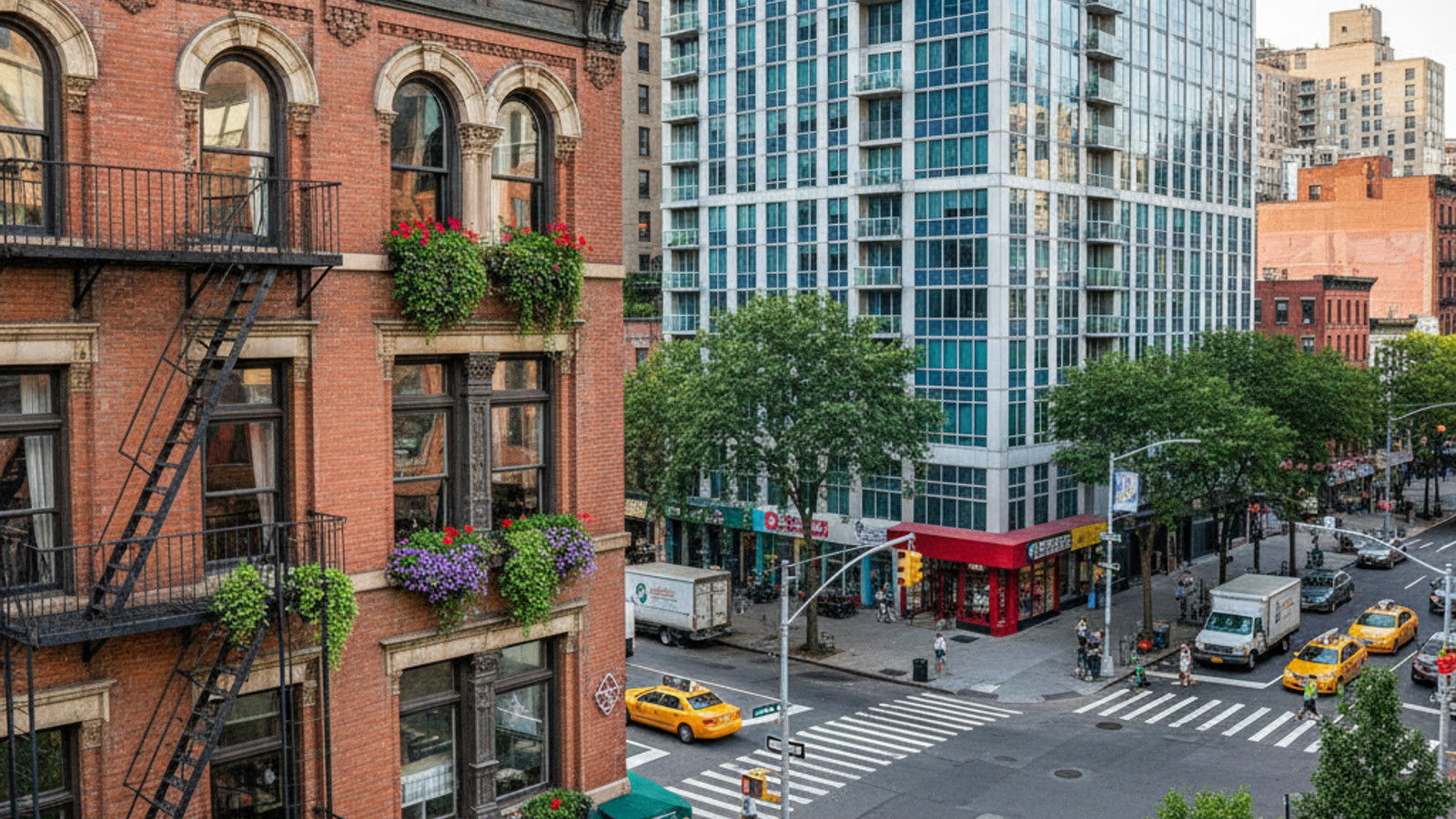
The Lower East Side features a diverse housing stock that directly impacts your final closing costs. The neighborhood is anchored by historic cooperatives, including many Housing Development Fund Corporation buildings, alongside modern high-rise condominiums near East River Park and the F, M, J, and Z subway lines. Your property classification dictates which specific transfer fees will apply at closing.
When selling a co-op, you will likely encounter a flip tax, which is a transfer fee paid directly into the building's reserve fund rather than to the government. Typical co-op flip taxes in New York City range from 1% to 3% of the sale price. This money is used to fund major building repairs and keep monthly maintenance costs stable for the remaining shareholders.
Sellers in HDFC income-restricted co-ops must pay special attention, as these specific buildings often impose significantly higher flip taxes ranging from 10% to 30% of the total profit. Condominiums do not have flip taxes, but their management companies frequently charge standard administrative transfer fees to process the sale. Always review your building's proprietary lease or bylaws to confirm your exact obligations before listing.
Real Estate Attorney Fees and Additional Seller Expenses
Hiring a real estate attorney is not just recommended in New York - it is a standard requirement for legally completing a property transaction. A dedicated attorney reviews the contract of sale, clears title issues, and represents your financial interests at the closing table. Attempting to navigate a Manhattan real estate transaction without legal counsel is virtually impossible.
Real estate attorney fees in the city currently average between $2,000 and $4,000, depending on the complexity of your specific sale. Beyond legal representation, sellers must also account for building management transfer fees and potential move-out deposits required by the cooperative board or homeowners association. These deposits ensure you do not damage common areas while moving your furniture out of the building.
These administrative building fees and refundable move-out deposits can range from $500 to over $1,500 depending on your building's specific rules. Co-op sellers will also need to pay UCC-3 filing fees to officially pay off their underlying loan, while condo owners pay similar mortgage satisfaction fees. Your attorney will itemize all of these smaller charges on your final settlement statement.
Sample Closing Cost Calculation for a Lower East Side Property
Looking at a practical example helps clarify exactly how these percentages translate into actual dollars during a transaction. We can estimate the total closing costs using a current median sale price for a typical cooperative apartment in the neighborhood. This exercise demonstrates why understanding your net proceeds early in the process is so critical.
For this scenario, we will assume a median sale price of approximately $1,200,000. This calculation includes standard broker representation, state and city taxes, a typical building flip tax, and average legal expenses. It provides a realistic snapshot of what a seller can expect to deduct from their gross sale price.
Keep in mind that your actual costs will vary based on your specific building policies and the final negotiated terms of your contract. Here is an approximate breakdown of what a seller would owe on a $1,200,000 transaction:
Broker Commission (5%): $60,000
New York City Transfer Tax (1.425%): $17,100
New York State Transfer Tax (0.4%): $4,800
Building Flip Tax (2%): $24,000
Attorney and Miscellaneous Fees: $3,500
Estimated Total Closing Costs: $109,400
Frequently Asked Questions
Are seller closing costs tax deductible in New York?
Yes, many seller closing costs can be deducted from your capital gains when you file your taxes. Fees like broker commissions, transfer taxes, and attorney fees effectively lower your realized profit, which reduces your overall capital gains tax burden. You should always consult a licensed tax professional to ensure you are accurately reporting these deductions.
Do I pay closing costs on a co-op in New York?
You absolutely pay closing costs when selling a cooperative apartment in New York City. In addition to standard broker commissions and state transfer taxes, co-op sellers are uniquely responsible for building flip taxes and UCC-3 filing fees. The flip tax alone can add thousands of dollars to your final expense sheet.
Is it possible to reduce my seller closing costs in NYC?
You can reduce your closing costs by negotiating specific line items before signing any contracts. While transfer taxes are fixed government rates, sellers can negotiate broker commissions or ask the buyer to cover certain building administrative fees. In a highly competitive market, shifting some of these costs to the buyer is a valid negotiation strategy.