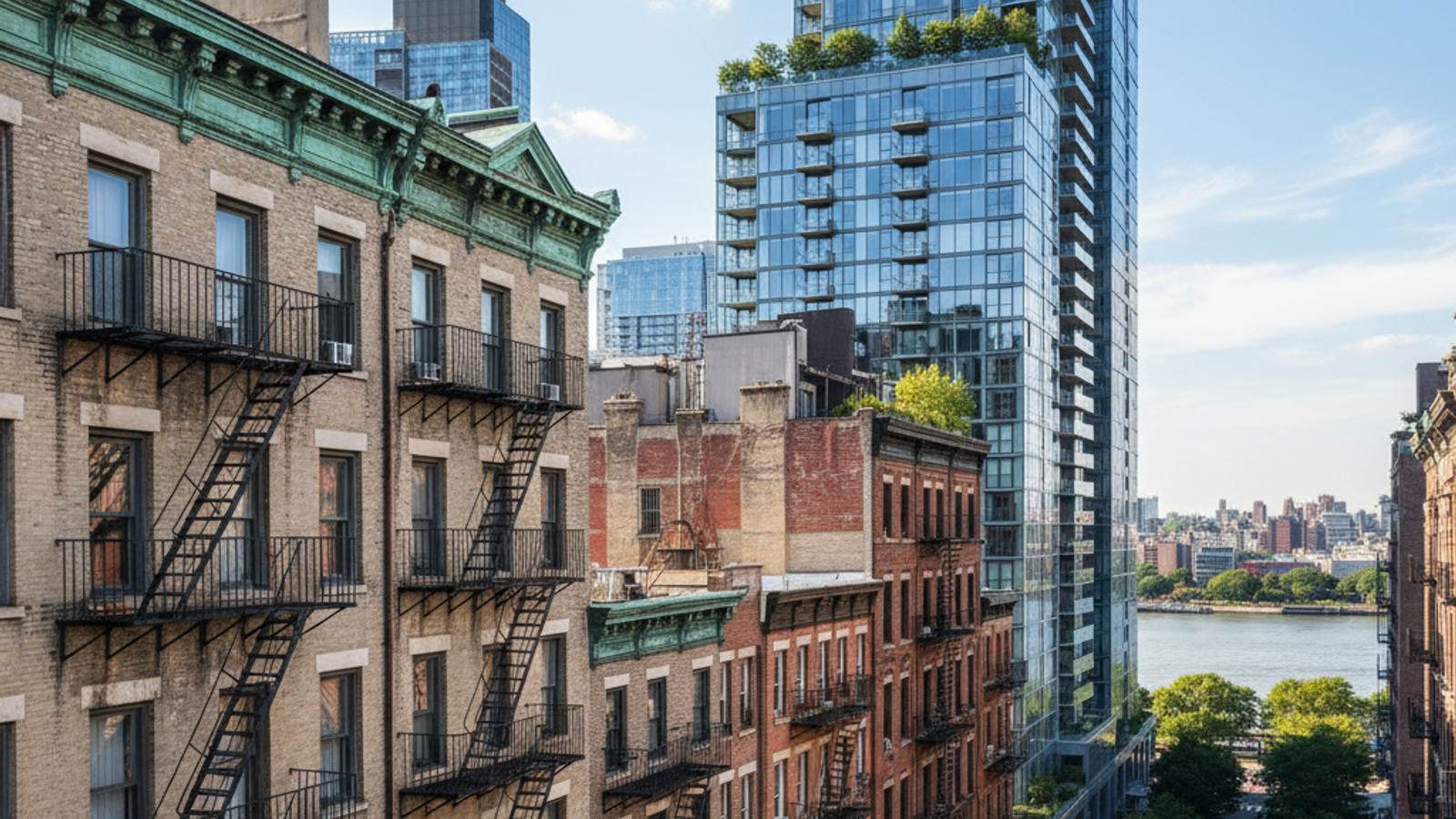
If there is one neighborhood that perfectly captures the "Old New York" mythology while aggressively chasing the future, it is the living in the Lower East Side (LES). This isn't just a place to sleep; it’s a high-octane collision where 19th-century immigrant history slams right into 2026 luxury high-rises.
Historically, this area was the first stop for millions of immigrants, a dense enclave of tenements and pushcarts. Today, it has evolved into one of the city's undisputed cultural hotspots. The demographic here is a fascinating mix. You have long-time locals who have seen the neighborhood change over decades living right next door to young creatives and finance professionals drawn by the nightlife. This immigrant history is a foundational part of the area's charm.
Living here is a specific choice. It is loud, it is undeniably expensive, and the sidewalks are often crowded. But if you are looking for unmatched energy, you won't find another neighborhood quite like it. If you are browsing our moving to NYC guide, the LES is usually the chapter highlighted for people who want to be right in the center of the action.
The Vibe: What It’s Really Like Living in the LES
The Lower East Side has a split personality that shifts the moment the sun goes down. During the day, it feels like a genuine neighborhood. You’ll see locals hauling bags of produce from Essex Market, art lovers gallery-hopping on the side streets, and a distinct lack of the polished, corporate atmosphere you might find in Midtown. It feels authentic, a bit raw, and very creative.
Come nightfall, however, the vibe transforms completely. Ludlow and Orchard Streets basically turn into open-air block parties. The area becomes a destination for the rest of the city, meaning the bars and sidewalks pack out quickly.
Visually, the aesthetic is a patchwork. You will look at a pre-war tenement building with rusted fire escapes, and then turn your head to see a glossy new development like Essex Crossing towering over it. It’s a stark contrast that defines the area. A quick warning on the noise level, though: this is not a quiet suburb. Between the street noise, the music from bars, and the sirens, the background hum is high.
Pros and Cons of Living in the Lower East Side
When I sit down with clients thinking about this area, we usually sketch out a quick balance sheet. It’s a neighborhood of extremes, so you have to be willing to take the bad with the good.
The Pros:
• Incredible Food Scene: You are steps away from some of the best food in the world, from cheap dumplings to high-end dining.
• Walkability: You rarely need a car (and shouldn't want one here). You can walk to SoHo, Chinatown, and the East Village easily.
• Rich History: The streets have character that new developments just can’t replicate.
• Nightlife: If you love going out, there is no better place to be.
The Cons:
• Expensive Rent: You are paying a premium for the location, often for less square footage.
• Noise Pollution: Peace and quiet are rare commodities here.
• Trash Issues: The narrow sidewalks and high density mean trash bags pile up quickly on collection days.
• Limited Green Space: Compared to Uptown or areas near Central Park, open grass is harder to find.
Housing Market: Rents, Condos, and Tenements
If you are looking at Lower East Side apartments for rent or sale in early 2026, you need to understand the building stock. The vast majority of inventory consists of 5-story walk-up tenements. These historic buildings have charm, but they also have smaller footprints and no elevators. If you want a doorman, gym, and elevator, you will be looking at the newer luxury developments springing up near the waterfront and around Essex Crossing.
We also see a mix of co-ops and condos here. The LES is famous for its HDFC co-ops—income-restricted units that keep the neighborhood affordable for some—sitting right alongside market-rate condos that sell for millions.
The market here moves incredibly fast. If you find a place you like, have your paperwork ready immediately. Here is what the numbers look like as of early 2026:
• Average Studio Rent: Expect to pay between $3,500 and $4,200 a month.
• Average 1-Bedroom Rent: Prices generally range from $4,200 to $5,800 depending on the building’s amenities.
• Median Sales Price: Buyers are looking at the $1.1M range, though this varies heavily between a walk-up co-op and a new condo.
For those new to the process, brushing up on renting in NYC tips can save you a headache when competing for these units.
Cost of Living in the Lower East Side
Rent is your biggest line item, but the daily cost of living in the Lower East Side can creep up on you if you aren't careful. The "grit" of the neighborhood doesn't always translate to "cheap."
Grocery shopping is a choose-your-own-adventure experience. You can spend a premium at Essex Market for artisanal cheeses and fresh seafood, or you can walk a few blocks south to Chinatown for incredibly budget-friendly produce. Dining out varies just as wildly. You can grab a $5 snack or sit down for a $200 tasting menu on the same block.
Nightlife is where budgets often break. Cocktails in the area average around $18 to $22, and cover charges are common at the trendier clubs. Also, keep an eye on utilities. Many of the older tenement buildings have poor insulation, which can lead to surprisingly high heating or cooling bills during extreme weather.
Ideally, you want an income of $100,000+ to live comfortably here solo, though we see plenty of students and younger professionals making it work with roommates and strict budgeting.
Transportation: Subways, Buses, and Ferries
Getting around is one of the neighborhood's strong suits. The F train at the Delancey-Essex station is the primary lifeline for most residents, connecting you quickly to Midtown or Brooklyn. You also have access to the M, J, and Z lines, which opens up commute options to the Financial District and beyond.
For North-South travel, which is notoriously tricky on the east side, the M15 Select Bus Service (SBS) runs up 1st Avenue and down 2nd Avenue. It’s a vital connector if you need to get uptown without transferring subways.
There is also the NYC Ferry stop at Corlears Hook. It’s a scenic way to commute to Wall Street or across to Brooklyn, provided you live close enough to the water to make the walk worth it. Speaking of walking, the walkability score here is massive. You are physically close to the East Village, NoHo, and SoHo, making it easy to enjoy the best neighborhoods in Manhattan without swiping a MetroCard. Citi Bikes are everywhere, though docking stations tend to empty out fast during the morning rush.
Local Amenities: Shopping, Parks, and Culture
You don't move here for suburban sprawl, but the amenities make the density livable.
• Shopping: Orchard Street is still the heart of the area's retail, lined with independent boutiques and vintage stores. For the essentials, the arrival of Essex Crossing brought a massive Trader Joe’s and a Target, which was a game-changer for residents who used to haul basics from Union Square.
• Parks: Green space is precious here. Seward Park is a community hub with a library and playground. Sara D. Roosevelt Park offers courts and stretches of pavement for sports. East River Park is the largest green lung, but it’s important to note that ongoing coastal resiliency construction has restricted access to parts of the waterfront.
• Culture: This area breathes history. The Tenement Museum is a world-class institution that tells the story of the neighborhood's past. You also have the New Museum for contemporary art, the Metrograph for indie cinema lovers, and the International Center of Photography.
• Gyms: You have your pick of major chains and boutique studios, so staying active is easy (even if your building doesn't have a fitness center).
Dining and Nightlife Highlights
This section could easily be its own book. The dining scene is a mix of protected legends and aggressive newcomers.
For the classics, you have Katz's Delicatessen for pastrami and Russ & Daughters for the quintessential appetizing counter experience. Places like Economy Candy satisfy the sweet tooth with a nostalgic twist. But the modern dining scene is just as strong, offering everything from high-end omakase to trendy burger spots that have lines wrapping around the corner.
When the sun sets, the neighborhood really turns on. You have rooftop bars like Mr. Purple offering stunning city views, alongside gritty dive bars on Ludlow that haven't changed in decades. If you are into live music, venues like the Bowery Ballroom are legendary. Coffee culture is also strong here, with plenty of cafes serving as laptop-friendly workspaces during the day before the evening rush begins.
Safety and Noise Levels
Safety is a common question, and I always answer it with nuance. Statistically, the Lower East Side is generally safe, but because it is a nightlife destination, petty theft rates can be higher due to the crowds.
The nightlife impact is real. Late nights bring rowdy behavior, and the streets can feel chaotic at 2 a.m. on a Saturday. While the main avenues are well-lit and busy, some areas near the parks can feel a bit less secure very late at night.
As for noise, this is one of the louder neighborhoods in NYC. If you are a light sleeper, you will likely need earplugs or a sound machine. It’s part of the trade-off for living in a 24-hour neighborhood.
Neighborhood Comparisons: LES vs. The Neighbors
Deciding where to land often comes down to splitting hairs between nearby neighborhoods.
• LES vs. East Village: The East Village feels slightly more residential and bohemian. It has more trees and a slightly more relaxed pace during the day. Choose the LES if you want higher-energy nightlife and access to newer luxury high-rises; choose the East Village for a classic "village" feel.
• LES vs. Chinatown: Chinatown is vibrant, chaotic, and generally cheaper for rent and food. However, the LES is far more focused on nightlife and bar culture. If you want quiet evenings, Chinatown might actually be louder during the day but quieter at night depending on the block.
• LES vs. SoHo: SoHo is the polished, fashion-forward neighbor. It is cleaner, more retail-focused, and significantly more expensive. The LES is grittier, younger, and feels more "indie" compared to the open-air mall vibe that SoHo can sometimes have.
Frequently Asked Questions
Is the Lower East Side safe to live in 2026?
The neighborhood is a busy urban environment that is generally safe for residents, though it pays to be street-smart. Because of the heavy nightlife foot traffic, petty crime can happen, but violent crime remains relatively low compared to the density of the area.
How much is rent in the Lower East Side?
As of early 2026, you should budget around $3,500 to $4,200 for a studio and upwards of $4,200 for a one-bedroom apartment. Prices fluctuate by season, with summer usually being the most expensive time to sign a lease.
Is the Lower East Side good for families?
While it isn't the quietest neighborhood, many families make it work thanks to amenities like Seward Park and the library. However, the prevalence of walk-up buildings can be tough with strollers, so families often prioritize the newer elevator buildings near Essex Crossing.
What subway lines go to the Lower East Side?
The F train is the main line serving the neighborhood at the Delancey-Essex station. You also have easy access to the J, M, and Z lines, making the commute to Brooklyn or the Financial District very efficient.
Is the Lower East Side noisy?
Yes, it is one of the louder parts of Manhattan. Between the late-night bar crowds, traffic, and general density, you should expect a high level of ambient noise day and night.